

Hey there! As a supplier of BLDC motors, I've seen firsthand how the materials used in these motors can have a huge impact on their performance and cost. In this blog post, I'm gonna break down the key materials and explain how they affect your BLDC motor.
Let's start with the stator. The stator is the stationary part of the motor, and it's typically made up of laminated steel sheets. These laminations are designed to reduce eddy current losses, which can cause the motor to heat up and lose efficiency. The quality of the steel used in the stator can vary widely, and higher-grade steel can offer better magnetic properties and lower losses. However, these high-quality steels can also be more expensive, so it's a balance between performance and cost.
Another important material in the stator is the winding. The winding is made up of copper wire, which is used to create the magnetic field that drives the motor. The gauge of the wire and the number of turns can have a big impact on the motor's performance. Thicker wire can handle more current, which can increase the motor's torque and power output. However, it also takes up more space in the stator, which can limit the number of turns and reduce the motor's efficiency. On the other hand, thinner wire can allow for more turns, which can increase the motor's efficiency, but it can also limit the amount of current the motor can handle.
Now, let's talk about the rotor. The rotor is the rotating part of the motor, and it's typically made up of permanent magnets. The type of magnets used in the rotor can have a significant impact on the motor's performance and cost. The most common type of magnet used in BLDC motors is neodymium iron boron (NdFeB). These magnets are known for their high magnetic strength and are widely used in high-performance motors. However, they can also be quite expensive, especially when the price of rare earth metals fluctuates.
Another option is ferrite magnets. Ferrite magnets are less expensive than NdFeB magnets, but they also have lower magnetic strength. This means that motors using ferrite magnets may have lower torque and power output compared to those using NdFeB magnets. However, for applications where cost is a major concern and high performance is not required, ferrite magnets can be a good choice.
The housing of the motor is also an important consideration. The housing provides protection for the internal components of the motor and helps to dissipate heat. It's usually made of materials like aluminum or plastic. Aluminum is a popular choice because it's lightweight, has good thermal conductivity, and is relatively inexpensive. Plastic, on the other hand, is even lighter and can be molded into complex shapes, but it may not have the same level of thermal conductivity as aluminum.
The bearings used in the motor are also crucial. High-quality bearings can reduce friction and wear, which can improve the motor's efficiency and lifespan. However, they can also add to the cost of the motor. Cheaper bearings may be sufficient for some applications, but they may need to be replaced more frequently, which can increase the overall cost of ownership.
Let's take a look at how these material choices affect the performance and cost of different types of BLDC motors. For example, BLDC Fan Motor is often used in applications where energy efficiency and quiet operation are important. Using high-quality stator materials and thin-gauge copper wire can help to increase the motor's efficiency, which can reduce energy consumption and noise. However, if cost is a major concern, using lower-grade steel and thicker wire may be a more viable option.
EC Range Hood Motor requires high torque and power output to effectively remove smoke and odors from the kitchen. In this case, using a rotor with high-strength NdFeB magnets and a stator with thick-gauge copper wire can provide the necessary performance. However, these materials can be expensive, so it's important to balance the performance requirements with the budget.

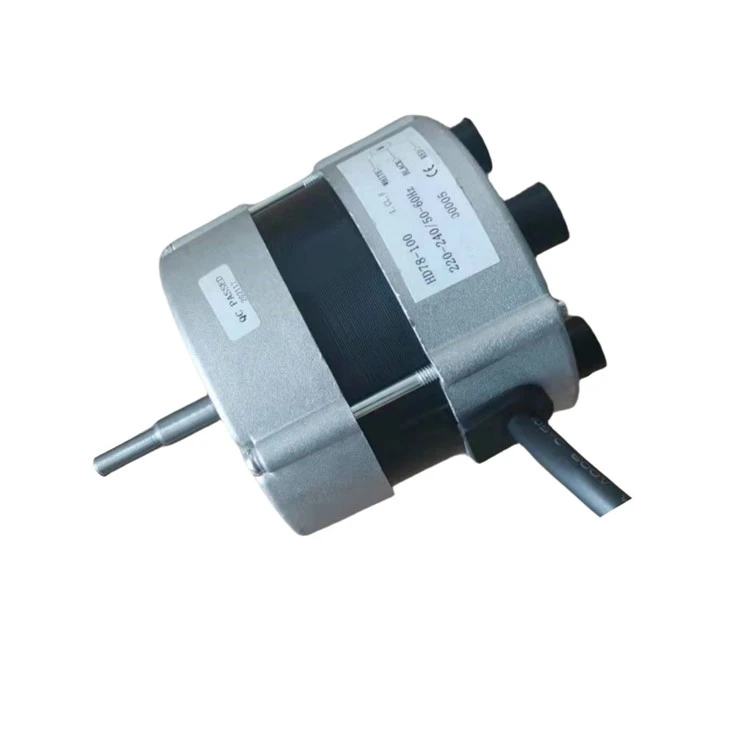
BLDC Blower Motor is used in a variety of applications, from HVAC systems to industrial blowers. The choice of materials for this type of motor depends on the specific requirements of the application. For example, if the blower needs to operate at high speeds for long periods of time, using high-quality bearings and a housing with good thermal conductivity can help to ensure reliable performance.
In conclusion, the materials used in a BLDC motor can have a significant impact on its performance and cost. As a supplier, I understand the importance of finding the right balance between these two factors. Whether you're looking for a high-performance motor for a demanding application or a cost-effective solution for a budget-conscious project, I can help you choose the right materials for your needs.
If you're interested in learning more about our BLDC motors or have any questions about material selection, feel free to reach out to me. We're always happy to have a chat and see how we can help you with your motor requirements.
References
- "Electric Motors and Drives: Fundamentals, Types and Applications" by Austin Hughes
- "Permanent Magnet Synchronous and Brushless DC Motor Drives" by T. J. E. Miller