

Hey there! As a supplier of radial fan blowers, I've been getting a lot of questions lately about how the temperature of the air affects the performance of these nifty machines. So, I thought I'd sit down and write a little something to clear things up.
First off, let's talk about what a radial fan blower actually is. In simple terms, it's a type of fan that uses centrifugal force to move air. The blades of the fan spin, and as they do, they fling the air outwards from the center of the fan. This creates a high-pressure area at the outer edge of the fan, which then forces the air to move through the system.
Now, let's get into the nitty-gritty of how air temperature comes into play. You see, air is a gas, and like all gases, it expands when it's heated and contracts when it's cooled. This change in volume has a direct impact on the performance of a radial fan blower.
When the air temperature is high, the air molecules have more energy and are moving around more freely. This causes the air to expand, which means there are fewer air molecules per unit volume. In other words, the air is less dense. When a radial fan blower is working with less dense air, it has to work harder to move the same amount of air. This is because the fan blades have less mass to push against, so they have to spin faster to generate the same amount of airflow. As a result, the fan may draw more power and produce less pressure than it would in cooler air.
On the flip side, when the air temperature is low, the air molecules have less energy and are closer together. This makes the air more dense, with more air molecules per unit volume. When a radial fan blower is working with more dense air, it can move the same amount of air with less effort. The fan blades have more mass to push against, so they don't have to spin as fast to generate the same amount of airflow. This means the fan may draw less power and produce more pressure than it would in warmer air.
Let's take a look at some real-world examples to illustrate these points. Imagine you're using a radial fan blower to ventilate a kitchen. During the summer months, when the air temperature is high, the fan may struggle to move the hot, less dense air out of the kitchen. You might notice that the fan is making more noise and using more electricity than usual, but the ventilation doesn't seem as effective. On the other hand, during the winter months, when the air temperature is low, the fan may be able to move the cold, more dense air out of the kitchen more easily. You might notice that the fan is quieter and using less electricity, and the ventilation seems to be working better.
Another example is in an industrial setting. Let's say you're using a radial fan blower to cool a machine. If the air temperature in the factory is high, the fan may have a hard time removing the heat from the machine. This could lead to the machine overheating and potentially breaking down. However, if the air temperature in the factory is low, the fan may be able to cool the machine more effectively, reducing the risk of overheating and extending the lifespan of the machine.
It's also important to note that extreme temperatures can have even more significant effects on the performance of a radial fan blower. In very high temperatures, the fan motor may overheat, which can cause damage to the motor and reduce the lifespan of the fan. In very low temperatures, the lubricants in the fan bearings may thicken, which can cause the bearings to seize up and the fan to stop working.
So, what can you do to ensure that your radial fan blower is performing at its best, regardless of the air temperature? Here are a few tips:
- Choose the right fan for the job: When selecting a radial fan blower, make sure to consider the temperature range of the environment in which it will be operating. If you'll be using the fan in a hot environment, choose a fan that is designed to handle high temperatures. If you'll be using the fan in a cold environment, choose a fan that is designed to operate in low temperatures.
- Maintain the fan regularly: Regular maintenance is key to keeping your radial fan blower in good working condition. This includes cleaning the fan blades, checking the motor and bearings for wear and tear, and lubricating the moving parts as needed.
- Monitor the air temperature: Keep an eye on the air temperature in the environment where the fan is operating. If the temperature is getting too high or too low, take steps to adjust the temperature or the fan settings to ensure that the fan is working properly.
- Use a temperature controller: Consider using a temperature controller to automatically adjust the speed of the fan based on the air temperature. This can help to optimize the performance of the fan and reduce energy consumption.
At our company, we offer a wide range of radial fan blowers that are designed to perform well in a variety of temperature conditions. Whether you need a Cooker Hood Blower for your kitchen, a Ventilation System Centrifugal Fan for your industrial facility, or a Ventilation Blower Fan for your home, we've got you covered.
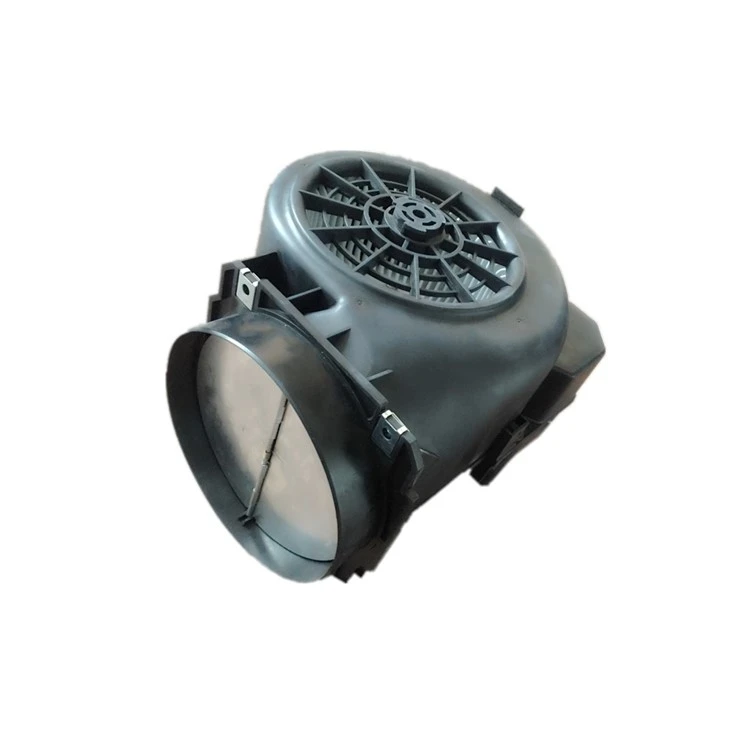

If you're interested in learning more about our radial fan blowers or have any questions about how air temperature affects their performance, please don't hesitate to get in touch. We'd be happy to help you find the right fan for your needs and answer any questions you may have.
In conclusion, the temperature of the air has a significant impact on the performance of a radial fan blower. By understanding how air temperature affects the fan and taking steps to optimize its performance, you can ensure that your fan is working efficiently and effectively, no matter what the temperature is outside. So, if you're in the market for a radial fan blower, make sure to keep these factors in mind and choose a fan that is designed to handle the temperature conditions of your environment.
References
- ASHRAE Handbook - Fundamentals. American Society of Heating, Refrigerating and Air-Conditioning Engineers.
- Fan Engineering: The Application, Analysis, and Design of Fans. Buffalo Forge Company.
- Understanding Centrifugal Fans and Blowers. Air Movement and Control Association International, Inc.