

As a supplier of radial blade blowers, I've had the privilege of delving deep into the intricate world of these remarkable machines. Radial blade blowers are widely used in various industries due to their unique design and performance characteristics. In this blog, we'll explore the air flow pattern of a radial blade blower, understand its significance, and how it impacts different applications.
Understanding the Basics of a Radial Blade Blower
Before we dive into the air flow pattern, let's briefly understand what a radial blade blower is. A radial blade blower consists of a set of blades that are arranged radially around a central hub. These blades are typically straight and perpendicular to the direction of rotation. When the blower is in operation, the impeller (the assembly of blades and hub) rotates at high speed, creating a centrifugal force that moves the air.
The Air Flow Pattern in a Radial Blade Blower
The air flow pattern in a radial blade blower can be described in several stages:
Inlet Stage
The process begins at the inlet of the blower. Air is drawn into the center of the impeller due to the low - pressure area created by the rotating blades. The air enters axially, moving parallel to the axis of rotation of the impeller. This axial flow is smooth and relatively uniform, as the inlet is designed to minimize turbulence and ensure efficient air intake.
Impeller Stage
Once the air enters the impeller, it encounters the rotating blades. The centrifugal force generated by the spinning impeller throws the air radially outward. As the air moves along the blades, its velocity increases significantly. The shape and angle of the radial blades play a crucial role in determining how effectively the air is accelerated. The straight design of radial blades allows for a direct transfer of energy from the impeller to the air, resulting in a high - velocity radial flow.
Outlet Stage
After leaving the impeller, the air exits the blower through the outlet. The air flow at the outlet is a combination of radial and tangential components. The radial component is due to the centrifugal force that pushed the air outward from the impeller, while the tangential component is a result of the rotation of the impeller. The outlet is often designed in a volute shape, which helps to convert the kinetic energy of the high - velocity air into pressure energy. As the air moves through the volute, its velocity decreases, and the pressure increases.
Significance of the Air Flow Pattern
The unique air flow pattern of a radial blade blower offers several advantages, which make it suitable for a wide range of applications:
High Pressure Generation
The centrifugal force created by the radial blade design allows radial blade blowers to generate high pressures. This makes them ideal for applications where air needs to be forced through long ducts or against high resistance, such as in industrial ventilation systems. For example, in a large factory, a radial blade blower can be used to supply fresh air to different parts of the building, overcoming the resistance of the ductwork and filters.
High Volume Delivery
Radial blade blowers can also deliver a large volume of air. The efficient air flow pattern ensures that a significant amount of air can be moved through the blower in a short period. This is beneficial in applications like cooling systems, where a large volume of air is required to remove heat from equipment.

Applications of Radial Blade Blowers
The air flow characteristics of radial blade blowers make them suitable for various applications:
Industrial Ventilation
In industrial settings, proper ventilation is crucial to maintain a safe and healthy working environment. Radial blade blowers are used to remove pollutants, dust, and fumes from the workplace. They can be integrated into ventilation systems to provide both supply and exhaust air. For instance, in a chemical plant, a radial blade blower can be used to exhaust toxic gases from the production area, ensuring the safety of the workers. Ventilation System Centrifugal Fan is an excellent example of a product that can be used in such industrial ventilation applications.
Kitchen Exhaust
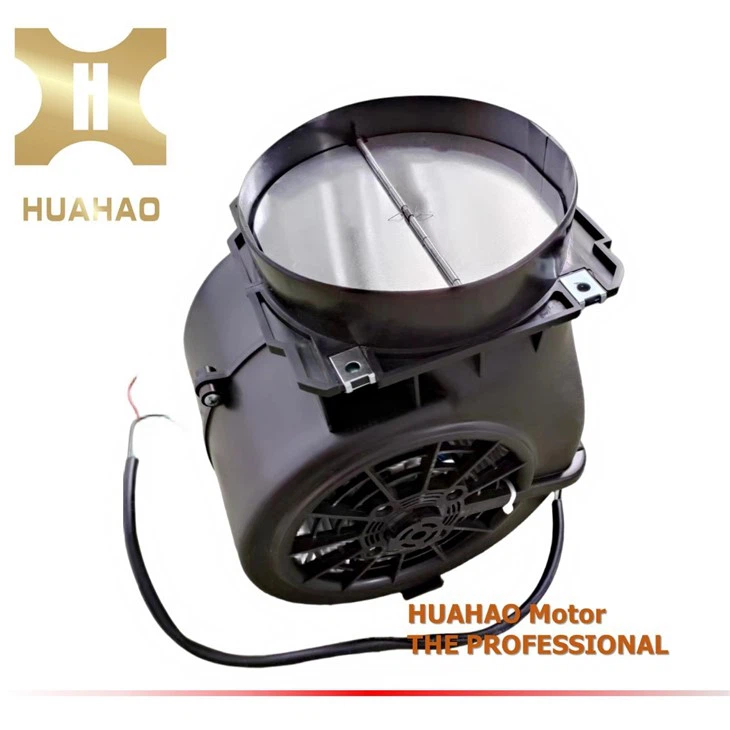
In commercial kitchens, radial blade blowers are commonly used to remove smoke, heat, and odors. The high - pressure and high - volume capabilities of these blowers allow them to effectively exhaust the air from the kitchen area. The Kitchen Blower is specifically designed for this purpose, with features that ensure efficient air removal and easy maintenance.
HVAC Systems
Heating, ventilation, and air - conditioning (HVAC) systems rely on radial blade blowers to distribute air throughout a building. The blowers can be used in both ducted and non - ducted systems to provide a consistent supply of conditioned air. In a large office building, for example, radial blade blowers can be used to circulate heated or cooled air to different floors and rooms.
Automotive Cooling
In the automotive industry, radial blade blowers are used in engine cooling systems. They help to draw air through the radiator to dissipate the heat generated by the engine. The high - volume air flow provided by the blower ensures efficient cooling, even under high - load conditions.
Factors Affecting the Air Flow Pattern
Several factors can affect the air flow pattern in a radial blade blower:
Blade Design
The shape, length, and angle of the blades have a significant impact on the air flow. Blades with a more aerodynamic design can reduce turbulence and improve the efficiency of the blower. For example, blades with a curved leading edge can help to smooth the air flow as it enters the impeller.
Impeller Speed
The rotational speed of the impeller directly affects the centrifugal force and, consequently, the air flow velocity. Higher impeller speeds result in higher air velocities and pressures. However, increasing the speed also increases the power consumption and noise level of the blower.
Inlet and Outlet Geometry
The design of the inlet and outlet can influence the air flow pattern. A well - designed inlet can minimize turbulence and ensure a smooth air intake, while an appropriately shaped outlet can effectively convert the kinetic energy of the air into pressure energy.
Comparison with Other Blower Types
When compared to other types of blowers, such as axial blade blowers, radial blade blowers have distinct advantages. Axial blade blowers produce an air flow that is parallel to the axis of rotation, which is suitable for applications where a large volume of air needs to be moved at low pressure. In contrast, radial blade blowers are better suited for applications that require high pressure and moderate to high volume. For example, an axial blade blower might be used in a large open - air stadium for general air circulation, while a radial blade blower would be more appropriate for a closed - loop ventilation system in a factory.
Conclusion
The air flow pattern of a radial blade blower is a complex yet fascinating phenomenon. Its unique combination of axial, radial, and tangential flows allows it to generate high pressures and deliver large volumes of air. This makes radial blade blowers an essential component in a wide range of applications, from industrial ventilation to automotive cooling.
If you are in need of a reliable radial blade blower for your specific application, we are here to help. Our expertise in manufacturing and supplying high - quality blowers ensures that you will get a product that meets your requirements. Whether you are looking for a Kitchen Blower, a Snail Fan Blower, or a Ventilation System Centrifugal Fan, we can provide you with the right solution. Contact us to start a procurement discussion and find the perfect radial blade blower for your needs.
References
- ASHRAE Handbook of HVAC Systems and Equipment.
- Fluid Mechanics and Thermodynamics of Turbomachinery by S. L. Dixon.
- Industrial Ventilation: A Manual of Recommended Practice by the American Conference of Governmental Industrial Hygienists.