

Your Professional AC Capacitor Motor Manufacturer in China
HUAHAO group specializes in the research and development and manufacture of motors & blowers. Our services are widely applied to the fields of home appliances: Range hood, industrial heater, Air cooler, Air condition, Air purifier, dehumidifier…etc and other ventilation systems
Support Customization
We can provide personalized solutions for each customers, we offer these products in varied specifications in order to meet the variegated requirements of our esteemed clientele.
Quality Oriented
We control the product quality critically for every step by our QC department, and these products are rigorously tested by our experts at our in-house testing unit, we have passed CE, ROHS and other certificates.
Excellent Service & Support
We have extensive experience in installation and commissioning, our engineer department will help with any questions about the products.
Advance Technology
Over the years we have gained specialization in designing and manufacturing of the motors and blowers to suit the different application and environment.

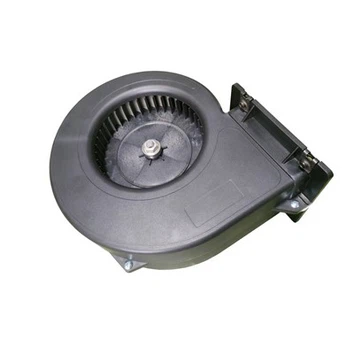


What is Plastic Centrifugal Fan
Plastic centrifugal fans, also known as plastic anticorrosive centrifugal fans, are strong, lightweight, and resistant to corrosion and aging. They also produce low noise. Centrifugal fans are used in air-handling units and have a "water wheel" shape. They extract air at right angles to the fan's intake and spin the air outwards to the outlet.
Notable Features of Plastic Centrifugal Fans

Model Specifications
Exclusively available in standard sizes (Ø160, Ø200, Ø250, Ø315), making it the perfect match for fume cupboard extract systems.
Fan Casing
Premium Grey PVC complemented with transparent “integra-flex” inlet and outlet connections for seamless integration.
Impeller Design
State-of-the-art forward-curved moulded polypropylene impeller ensuring optimum performance.
Motors
Standard IEC motors with an IP55 rating, customisable upgrades available upon request.
Maintenance Ease
The unique design allows the motor/impeller assembly to be detached without disconnecting the fan from the ductwork, ensuring faster and efficient maintenance routines.
Hardware
Premium stainless steel fixings for enhanced durability and longevity.
Additional Inclusions
Anti-vibration mountings come standard for a smooth operational experience.
Drive Arrangement
Exclusively direct drive, ensuring power efficiency.
Speed Regulation
Optional inverter drives available for precise speed control.
Discharge Options
Available in both L 90° & R 90° configurations for flexible installations.
Material Integrity
We handpick materials based on the application’s demands and their exceptional resistance to chemical attack. We’ll request comprehensive details during the tender phase to ensure the best fit.

Typical Applications For Plastic Centrifugal Fans
Water Aeration
In aquaculture and fish farming, water aeration is crucial to maintain adequate oxygen levels in the water. Those who operate fish farms often use centrifugal fans to create bubbles or agitation on the water’s surface, which increases oxygen transfer and promotes a healthier environment for aquatic life.
Heating Components
As we’ve already seen, centrifugal fans are integral components in various heating systems, including space heaters, industrial furnaces, and HVAC systems. They distribute heated air effectively, ensuring uniform temperatures in both residential and industrial settings.
Cooling
Though centrifugal fans work differently from axial flow fans, they are still fans. Because of this, centrifugal fans play a vital role in cooling applications, especially in air conditioning units, refrigeration systems, and radiators. They draw in ambient air and propel it over cooling coils or heat exchangers to dissipate heat and lower temperatures. The uses for this can range across many industries, primarily industrial applications. However, they can also be used in air conditioning, though not commonly for residential purposes due to the high level of noise centrifugal fans can generate.
Ventilation
Adequate ventilation is essential in buildings, mines, tunnels, and confined spaces to maintain proper air circulation and remove pollutants or stale air. Centrifugal fans are commonly used in ventilation systems, ensuring fresh air exchange and improving indoor air quality. Again, due to the noise level, residential applications of centrifugal fans for ventilation are mainly limited to large apartment buildings, not houses or smaller structures.
Industrial Drying
Centrifugal fans aid in drying processes in manufacturing and processing industries, such as food processing, pharmaceuticals, and chemicals. They accelerate the evaporation of moisture from products, ingredients, or materials, leading to improved efficiency and reduced production times. For drying systems, centrifugal fans can be combined with heating systems or used without them, depending on the specific requirements of the products that require drying.
Dust And Gas Extraction
Industries that produce dust, fumes, or harmful gases need efficient extraction systems to maintain a safe and clean working environment. This is where the reversible nature of centrifugal fans comes in very handy. Centrifugal fans are employed in dust collectors and gas extraction systems to remove contaminants like dust, chemicals, or smoke from work areas and filter or expel them outside. This is vital for ensuring a healthy working environment and preventing cross-contamination in some industries.
Gas Boosting
One of the primary benefits of a centrifugal fan is its capability to create stable air pressure. In applications where low-pressure gases must be compressed or boosted to higher pressures, centrifugal fans can be utilised to achieve the desired pressure levels. This is commonly seen in natural gas pipelines and other gas distribution systems.
Pneumatic Conveying
Some industries use industrial blowers as conveying systems to transport solid materials through pipelines. They are called pneumatic conveying systems, and these blowers use centrifugal fans. The centrifugal fan creates the necessary air pressure to propel the materials from one point to another efficiently, which cannot usually be done with axial flow fans.
Air Pollution Control
Most industries have strict environmental regulations these days since most countries have employed strategies and legislation to reduce their carbon footprint. Companies often use centrifugal fans in air pollution control systems such as scrubbers and catalytic converters in such industries. These systems effectively capture, filter, and process contaminants before releasing exhaust gases into the atmosphere. Centrifugal fans can provide the required pressure to ensure these systems work as they should.
Fume Hoods And Laboratory Exhaust Systems
In laboratories and chemical processing facilities, fume hoods and exhaust systems are utilised to protect workers from harmful fumes and chemicals. These contaminants must be taken out of the facility as quickly as possible to prevent poisoning or other harm, and the best way to ensure quick removal is a high-pressure system. That’s why centrifugal fans (in reverse configurations, acting as extractor fans) are critical components in these setups because they ensure that the fumes are captured and vented away from the workspace quickly and efficiently.
Grain Handling
We’ve already seen how the agriculture sector often uses centrifugal fans to dry crops in adverse weather conditions, but their uses aren’t limited based on the weather. Centrifugal fans can also be used in grain handling and storage facilities to aerate and cool stored grains. Proper aeration helps prevent spoilage and maintains grain quality during storage, lengthening the grain’s storage life and ensuring that it can be sold and used for longer than it could without the use of centrifugal fans.
Material Handling
Centrifugal fans aid in material handling processes, such as pneumatic transport in cement plants, sawdust collection in woodworking facilities, and handling various bulk materials in industrial settings.
Sewage Aeration
Aeration is an essential aspect of sewage treatment because it boosts the aerobic biodegradation of organic materials, speeding up the sewage treatment process. Centrifugal fans are the logical solution because sewage aeration systems require consistent high air pressure levels.
Advantages of Plastic Centrifugal Fans
Filters Out Impure Moist Air
This is probably the most known benefit of an exhaust fan. It filters out moist air, steam, dust, warm or cold air out of the kitchen or bathroom preventing the growth of moulds.
Controls the Humidity
Enclosed areas like bathrooms or kitchens often get very suffocated. As a result of which, the humidity increases. Presence of an exhaust fan helps in keeping the humidity in check.
Protect the Walls and Other things like Curtains, etc
A exhaust fan also helps in protecting walls and curtains from being greasy or sticky. As exhaust fan remove smokes, the tar doesn’t get collected on the walls or cloth materials hence keeping them fresh and clean.
Removes Strong or Burnt Smoke
While cooking in the kitchen, somethings get burnt sometimes. The smoke released makes it impossible for one to stay in the kitchen. An exhaust fan removes this strong smokes immediately.
Consumes Less Power
Though needed to be used often, exhaust fan consumes less power. It is a power-saving fan that does not produce humongous amounts in our electricity bill.
Easy and Effortless to Maintain
Exhaust fans have a very low maintenance cost. They are extremely effortless to maintain. Hence, you can relax if you are concerned about its Maintainance.
Structure of Plastic Centrifugal Fan


Casing
The casing is the outer structure of the fan, typically made of metal or plastic. Its primary functions are to protect internal components and guide/control the airflow, ensuring smooth circulation within the fan.
Impeller or Fan Blade
The impeller is the core component responsible for generating airflow. It is usually made of metal or plastic and designed in various shapes and angles to produce the desired air volume and pressure. The shape and angle of the impeller significantly impact the fan's performance.
Shaft
The shaft supports the impeller's rotation. It is typically made of metal, providing sufficient strength and rigidity to withstand the stress during impeller rotation.
Bearings
Bearings support the rotational movement of the shaft and can be ball bearings or plain bearings. Proper bearing design ensures smooth fan operation, minimizing friction and energy loss.
Motor
The motor provides power to drive the impeller's rotation. The fan's performance and efficiency depend, in part, on the motor's capabilities. The motor often needs to be coordinated with a control system to adjust the fan's operating speed.
Inlet and Outlet Ports
The inlet is where the fan draws in air, and the outlet is where the fan discharges airflow. The design shape and dimensions of the inlet and outlet affect the fan's performance and efficiency.
Frame
The frame provides structural support for the fan, holding the entire fan assembly. It is typically made of metal or plastic, ensuring stable fan operation and securing the fan in the desired position.

●Turn the device off at the switch or circuit breaker so no electricity can be passed on.
●Remove any cover and pull its cover down. If there are any metal clips or pins present on each side, you can squeeze them gently and also release the cover.
●Wash the cover with warm water and some soap or even vacuum it to clean.
●Unplug any fixture that is present and, depending on the model, remove the visible motors or the screws for the in-depth cleaning process.
●Clean the surrounding parts of the motor or the blades with any damp cloth. If you don’t want to take the motor out, you can vacuum inside the housing and the motor.
●Clean the surrounding area and the exhaust vent and make sure everything is dry before you replace the cover.
●You can then reinstall the exhaust and turn on the electricity after that and enjoy a more efficient and cleaner exhaust.
Our Honor
CE, CCC, CQC, ISO9001, RoHs

Factory Video
Common Problem of Plastic Centrifugal Fan
Q: What is the purpose of a centrifugal fan?
Q: What are centrifugal fans made of?
Q: What are the characteristics of a centrifugal fan?
Q: Are centrifugal fans better?
Q: Are centrifugal fans better than EC fans?
Q: How can we increase centrifugal fan efficiency?
Q: What are the basics of centrifugal fans?
Q: What is centrifugal inline fan?
Q: What is the use of fireplace blower?
Q: What is a centrifugal extract fan?
Q: How does an industrial extractor fan work?
Q: What is the difference between a fan and an extractor fan?
Q: Do extractor fans let air in?
Q: How do non vented extractor fans work?
Q: Do extractor fans need electric?
Q: Are centrifugal fans better?
Q: How does mechanical extract ventilation work?
Q: What does CFM mean extractor fan?
Q: How does mechanical extract ventilation work?
Q: How do inline extractor fans work?
Shengzhou City Huahao Motor Manufacturing Co., Ltd. is one of the most professional plastic centrifugal fan manufacturers and suppliers in China, specialized in providing the best custom service. We warmly welcome you to wholesale cheap plastic centrifugal fan from our factory.
Plastic Industrial Centrifugal Fan, Plastic Centrifugal Blower, 310 Volt Centrifugal Fan