

Hey there! As a supplier of inline axial fans, I often get asked about the air distribution pattern of these fans. It's a super important topic, especially for those who are looking to use these fans in various applications. So, let's dive right in and chat about what the air distribution pattern of an inline axial fan is all about.
First things first, let's understand what an inline axial fan is. An inline axial fan is a type of fan where the blades rotate around an axis, and the air flows parallel to that axis. This is different from centrifugal fans, which blow air at a 90-degree angle to the axis of rotation. Inline axial fans are great for applications where you need to move a large volume of air over a short distance. They're often used in ventilation systems, exhaust systems, and even in some industrial processes.
Air Flow Characteristics
The air distribution pattern of an inline axial fan is mainly determined by its blade design, blade pitch, and rotational speed. The blades of an inline axial fan are designed to create a pressure difference that forces air to move. As the blades spin, they pull air in from one side of the fan and push it out the other side.
The direction of the air flow is straight along the axis of the fan. This means that if you have an inline axial fan installed in a duct, the air will flow straight through the duct in a relatively uniform manner. However, the air velocity can vary across the cross-section of the duct. Typically, the air velocity is highest at the center of the duct and decreases towards the edges. This is because the blades are most effective at the center of their rotation, and the air experiences more friction as it gets closer to the duct walls.
Factors Affecting Air Distribution
There are several factors that can affect the air distribution pattern of an inline axial fan. One of the most important factors is the installation environment. If the fan is installed in a duct that is too narrow or has a lot of bends, it can cause the air to become turbulent. Turbulence can disrupt the normal air flow pattern and reduce the efficiency of the fan.
Another factor is the presence of obstructions in the air path. For example, if there are filters, grilles, or other equipment in front of or behind the fan, they can block the air flow and cause uneven air distribution. It's important to make sure that the air path is clear and unobstructed to get the best performance out of the fan.
The rotational speed of the fan also plays a role in the air distribution pattern. Higher rotational speeds generally result in higher air velocities, but they can also increase the level of turbulence. It's a balance between getting enough air flow and keeping the air distribution as uniform as possible.
Practical Applications and Matching Products
Now, let's talk about some practical applications of inline axial fans and how the air distribution pattern matters. In ventilation systems, for example, you want to make sure that the air is distributed evenly throughout the space. This helps to remove stale air, odors, and pollutants effectively.
If you're in the kitchen, inline axial fans can be used in Stove Hood Fan and Kitchen Chimney Blowers. In these applications, the fan needs to draw in the cooking fumes and expel them outside. A proper air distribution pattern ensures that all the fumes are captured and removed efficiently.
In industrial settings, inline axial fans are used in processes where temperature control or air circulation is crucial. For example, in a manufacturing plant, they can be used to cool machinery or to move air through a production line. The air distribution pattern needs to be carefully considered to ensure that the equipment is properly cooled and that the working environment is comfortable for the employees.
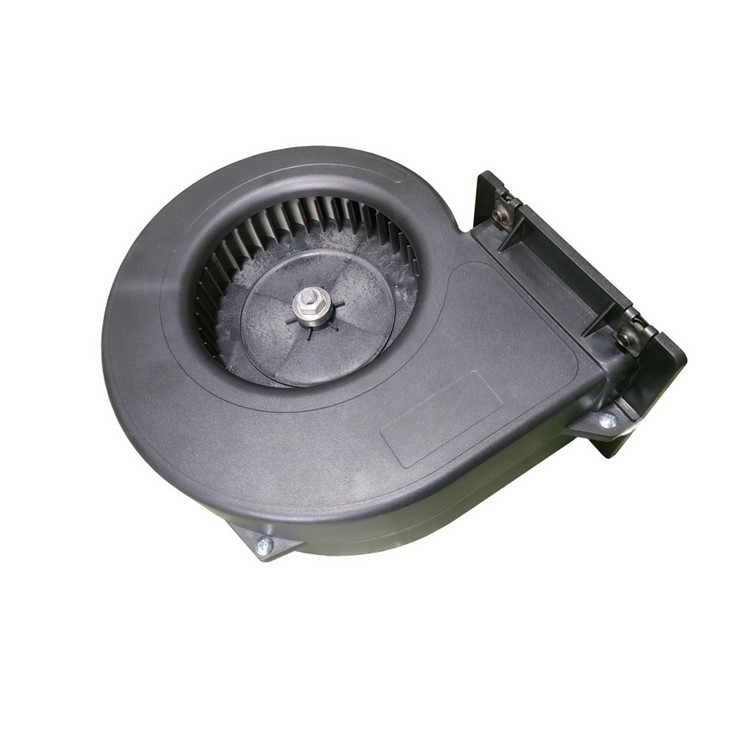
We also have Forward Curved Blower in our product range. These blowers work well in combination with inline axial fans in some applications. The forward curved design of the blades allows them to generate a high volume of air at a relatively low pressure, which can be useful in situations where you need to move air over a longer distance or through a more restrictive duct system.
Understanding Efficiency and Performance
When it comes to evaluating the performance of an inline axial fan, the air distribution pattern is closely related to its efficiency. A well-designed fan with a good air distribution pattern will be able to move more air with less power consumption. This not only saves energy but also reduces the operating cost over time.
To ensure that you're getting the best performance from your inline axial fan, it's important to choose the right fan for your specific application. Consider factors such as the required air volume, the pressure requirements, and the installation environment. And don't forget to regularly maintain the fan to keep it running smoothly.
Conclusion and Call to Action
In conclusion, the air distribution pattern of an inline axial fan is a key factor in its performance and effectiveness. Whether you're using it for ventilation, exhaust, or industrial processes, understanding how the air flows through the fan and how it can be affected by different factors is crucial.
If you're in the market for an inline axial fan or any of our related products like Stove Hood Fan, Kitchen Chimney Blowers, or Forward Curved Blower, we're here to help. We have a wide range of high-quality fans and blowers that can meet your needs.
Don't hesitate to reach out to us for more information or to discuss your specific requirements. We're always happy to have a chat and find the best solution for you. Let's work together to get the perfect air distribution system for your project!

References
- Fundamentals of Heating, Ventilation, and Air Conditioning by American Society of Heating, Refrigerating and Air-Conditioning Engineers (ASHRAE)
- Fan Handbook by Carolus de Jager and Linsey Mears