

In the world of ventilation and air - movement technology, mini centrifugal fans play a crucial role. These compact yet powerful devices are widely used in various applications, ranging from small electronics cooling to kitchen exhaust systems. As a supplier of mini centrifugal fans, I've witnessed firsthand the importance of every design aspect in determining a fan's performance. One of the most significant design factors is the blade shape. In this blog, we'll explore how different blade shapes impact the performance of a mini centrifugal fan.
1. Basic Principles of Mini Centrifugal Fans
Before delving into the influence of blade shape, it's essential to understand the basic working principle of a mini centrifugal fan. A centrifugal fan operates by using an impeller with blades to draw air in axially and then expel it radially. The rotation of the impeller creates a centrifugal force that accelerates the air, increasing its pressure and velocity. This basic mechanism is the foundation upon which the performance of the fan is built, and the blade shape can significantly modify this process.
2. Types of Blade Shapes and Their Effects
Forward - curved blades
Forward - curved blades are characterized by their shape that curves in the direction of the impeller's rotation. These blades are known for their high volumetric flow rate at relatively low rotational speeds. The curvature of the blades allows them to capture and move a large amount of air in a short time. In mini centrifugal fans, forward - curved blades are often used in applications where a high volume of air needs to be moved without consuming excessive power. For example, in some small - scale ventilation systems like Kitchen Blower, forward - curved blades can quickly exhaust cooking fumes and odors.
However, forward - curved blades also have some drawbacks. They tend to generate more noise compared to other blade shapes. This is because the air flow around the blades is more turbulent, which creates pressure fluctuations and noise. Additionally, forward - curved blades may have lower efficiency at high pressures, as the air flow can be more difficult to control and direct.
Backward - curved blades
Backward - curved blades curve in the opposite direction of the impeller's rotation. These blades are favored for their high efficiency and relatively low noise levels. The shape of the backward - curved blades allows for a more streamlined air flow, reducing turbulence and pressure losses. This results in a more efficient conversion of mechanical energy into air movement. Mini centrifugal fans with backward - curved blades are often used in applications where energy efficiency is a priority, such as in some energy - conscious electronic cooling systems.
In terms of performance, backward - curved blades can handle higher pressures compared to forward - curved blades. They are better at maintaining a stable air flow under varying pressure conditions. However, they typically require higher rotational speeds to achieve the same volumetric flow rate as forward - curved blades. This means that in applications where a large volume of air needs to be moved quickly, backward - curved blades may not be the most suitable choice.
Radial blades
Radial blades are straight and extend radially from the impeller's hub. They offer a balance between the characteristics of forward - curved and backward - curved blades. Radial blades can generate relatively high pressures and moderate volumetric flow rates. They are also relatively simple to manufacture, which can reduce production costs.
In mini centrifugal fans, radial blades are often used in applications where a combination of pressure and flow rate is required. For example, in Centrifugal Fan For Range Hood, radial blades can effectively remove cooking fumes while maintaining a certain level of pressure to push the air through the ductwork. However, radial blades may also generate more noise than backward - curved blades due to the more abrupt change in air flow direction.
3. Impact on Fan Performance Metrics
Airflow rate
The blade shape has a direct impact on the airflow rate of a mini centrifugal fan. As mentioned earlier, forward - curved blades are designed to move a large volume of air, so they generally have a higher airflow rate at lower speeds. Backward - curved blades, on the other hand, may require higher speeds to achieve a similar airflow rate. Radial blades offer a middle - ground solution, providing a moderate airflow rate that can be adjusted based on the specific design and operating conditions.
Pressure generation
Pressure generation is another important performance metric. Backward - curved blades are known for their ability to generate high pressures efficiently. They can maintain a stable pressure even when the system resistance changes. Forward - curved blades are less effective at generating high pressures, and their performance may degrade more rapidly as the pressure requirements increase. Radial blades can generate moderate pressures, making them suitable for applications where a certain level of pressure is needed but not extremely high.
Efficiency
Efficiency is a crucial factor in the performance of a mini centrifugal fan. Backward - curved blades typically have the highest efficiency among the three blade shapes. Their streamlined design reduces energy losses due to turbulence and pressure drops. Forward - curved blades are less efficient, especially at high pressures. Radial blades offer a reasonable level of efficiency, but it may be lower than that of backward - curved blades in some cases.
Noise level
Noise is an important consideration, especially in applications where quiet operation is required. Backward - curved blades generally produce the least amount of noise because of their more streamlined air flow. Forward - curved blades are the noisiest due to the turbulent air flow around them. Radial blades produce a moderate amount of noise, which can be further reduced through proper design and optimization.
4. Application - specific Considerations
Different applications have different requirements for mini centrifugal fans, and the blade shape should be selected accordingly.
In the electronics industry, where space is limited and energy efficiency is crucial, backward - curved blades are often the preferred choice. They can effectively cool electronic components without consuming too much power or generating excessive noise. For example, in small computers or mobile devices, a mini centrifugal fan with backward - curved blades can keep the internal temperature within a safe range.
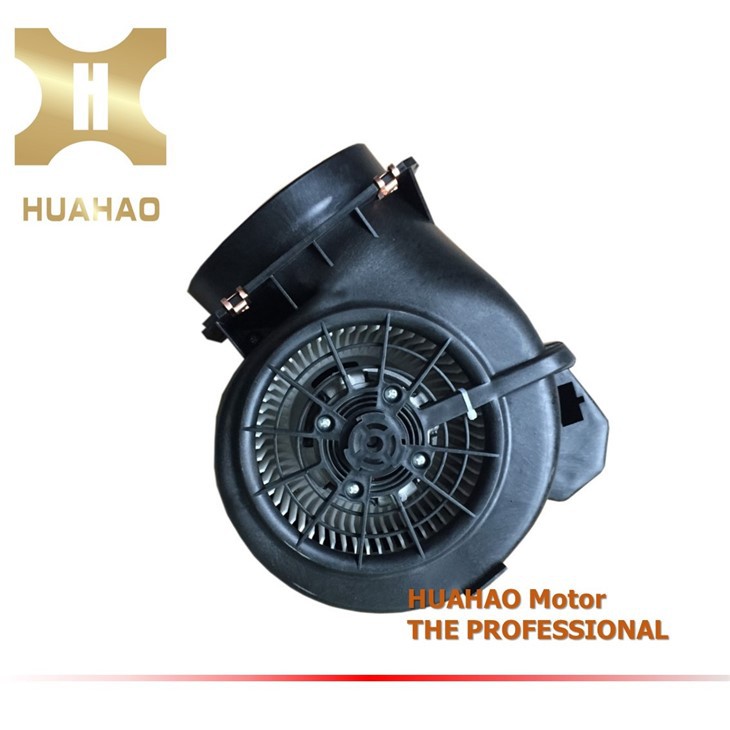
In the kitchen ventilation field, such as in Double Inlet Centrifugal Blower Fan, forward - curved or radial blades may be more suitable. These blade shapes can quickly move a large volume of air to remove cooking fumes and odors. However, noise reduction measures may need to be taken to ensure a comfortable kitchen environment.

5. Conclusion and Call to Action
In conclusion, the blade shape of a mini centrifugal fan has a profound impact on its performance in terms of airflow rate, pressure generation, efficiency, and noise level. As a supplier of mini centrifugal fans, we understand the importance of selecting the right blade shape for different applications. We offer a wide range of mini centrifugal fans with various blade shapes to meet the diverse needs of our customers.
If you are in the market for a mini centrifugal fan and need help in choosing the right blade shape for your specific application, please feel free to contact us. Our team of experts is ready to provide you with professional advice and high - quality products. Let's work together to find the best ventilation solution for your project.
References
- Fluid Mechanics and Thermodynamics of Turbomachinery by S. L. Dixon
- Fan Engineering: A Practical Guide by the American Society of Heating, Refrigerating and Air - Conditioning Engineers (ASHRAE)
- Centrifugal Fan Design and Application by D. S. Kutz